Short History
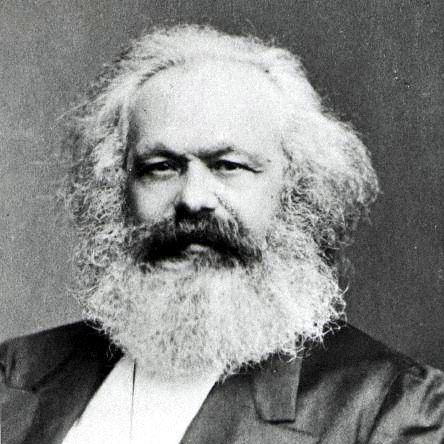
Communism was originally the political thought that concentrated on the liberation of the proletariat, or the working class. The idea for Communism, although well known before them, officially started with both Karl Marx and Frederich Engels in The Communist Manifesto, where they outlined their idea of complete equality between the people. The two men modified several different ideals from the writings of several authors and philosophists including Plato’s The Republic (4th century B.C.), Sir Thomas Moore’s Utopia (16th century A.D.), and Morelly’s Code de la Nature (1755). Prior to writing the Communist Manifesto, the men were also involved in different worker’s parties in Germany. The men combined their ideas with the ideals of other different parties to unify the workers of Germany and called the collective thought “Communism.” Written in 1848, the manifesto illustrated the struggle of the proletariat party to escape exploitation from capitalism. Communism as a form of government was first implemented by Vladimir Lenin in Russia 1917 after the Russian Revolution against then leader Czar Nicolas II. Lenin took the ideas of the two German authors and added his own philosophy, called now “Marxism-Leninism.” Soon after Communism became a recognizable force in the world. Although Marx clearly defined his vision of Communism, over the years many leaders have deviated from the original idea of communism. The most prime example of this would be the Soviet Union under the rule of Josef Stalin. Stalin, instead of creating a classless society, succeeded in creating a society where those within the government such as himself were held above everyone else. Eventually Stalin’s reign ended with his death in March of 1953, and the Soviet Union continued until its disillusion in 1991.
In the Marxist theory of history, changes in methods of production lie behind mankind's progression through certain predictable stages. In the recent past there has been feudalism, which has now given way to the 19th-century triumph of the bourgeoisie. In the future there is the imminent Dictatorship of the Proletariat, after which an interim period of Socialism will give way to the final achievement of Communism.
This progression is not, as liberals would wish, a gradual evolution. It is a series of violent upheavals in the struggle between the classes. One such occasion has been seen in France, where the bourgeoisie has overthrown the remains of feudalism in the revolution of 1789.
Once the new production methods of the Industrial Revolution have reached a critical point, crowding together a sufficient number of exploited workers in slum conditions in the cities, the stage will be set for the next revolution. The proletariat (a word used by Marx for the industrial working class) will smash the bourgeoisie and will appropriate their accumulated wealth for the common cause.
In the subsequent Dictatorship of the Proletariat all other considerations will be subordinated to safeguarding the revolution. This stage ends once everybody is a member of the proletariat. With only one class left, the class war is over. The next and penultimate stage is Socialism.
In the classless society of Socialism it is anticipated that mankind will live in harmony (class exploitation being the root of all evil). Now it will be possible for the apparatus of state gradually to wither away. The final Marxist paradise of Communism will operate on a simple and just distribution of work and wealth - in Marx's words, 'from each according to his abilities, to each according to his needs'.